


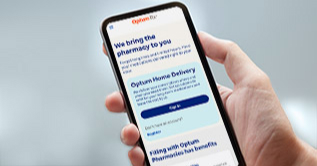



New to an FSA? Learn the basics
What is a flexible spending account (FSA)?
An FSA allows you to set aside pretax funds to cover health and care costs for you and your family. Since you don’t pay taxes on this money, you save on every dollar you put into your FSA.
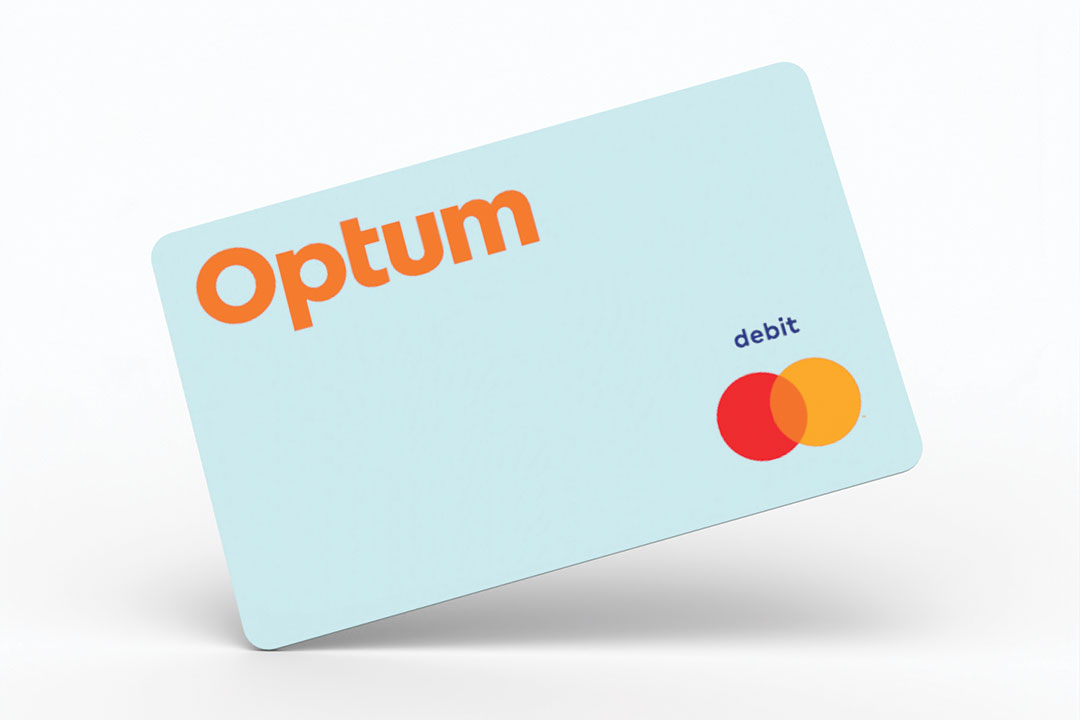
FSA cards: Pay the smarter way
Fast-track your payments with your FSA card. From bandages to braces, and contact lenses to chiropractic care, use your FSA card and know you’re saving time and money. Plus, you'll save an average of 30% because you’re using pretax dollars.*
What type of FSA is right for you?
Learn about the three types of flexible spending accounts (FSAs) and the eligible expenses they can help cover.
Health care flexible spending account (FSA)
Pay for eligible medical, dental, vision and prescription expenses for you and your family while saving with pretax dollars.
Dependent care flexible spending account (DCFSA)
A dependent care FSA helps you pay for eligible child care or adult dependent care expenses while you work, attend school or look for work.
Limited purpose flexible spending account (LPFSA)
Pair with a health savings account (HSA) to help pay for eligible dental and vision expenses.
Relax — you're saving with every card swipe
How do savings stack up when you use your FSA card? Let's take a look.
Is an FSA pretaxed?
For a $100 pair of eyeglasses, you could pay using your own money, or pay with your HSA or FSA card.
When you use your HSA or FSA card, since the money comes out of your pretax account, that same pair of eyeglasses now costs you $70.
It’s like having a 30%* off coupon every time you use your card.
Shop Optum Now for even more savings. Get an extra 7% off eligible OTC products. Use code OPTFSA7 to save more.**


Qualified expenses
FSA covered items
An FSA can help cover hundreds of eligible expenses. Shop using your FSA card to save up to 30%* since you’re using pretax dollars.

Online tools
FSA calculator
Confused about how much to contribute to your FSA? Use the calculator to see how much you can save on eligible health and dependent care expenses.
Frequently asked questions about your FSA
A health care FSA lets you set aside pretax dollars for eligible health care expenses. Your full elected amount is generally available on the first day of your plan year. Use your FSA card to pay for eligible expenses or request reimbursement for qualified out-of-pocket purchases.
Health care FSA funds are generally available on the first day of your plan year, even though contributions are deducted from your paycheck throughout the year. Dependent care FSA funds become available as contributions are made. Refer to your plan documents for details.
In most cases, no. FSA contribution elections are typically made during annual enrollment and remain in effect for the plan year.
Changes may be allowed if you experience a qualifying life event, such as marriage, divorce, the birth of a child or a change in employment status. Refer to your plan documents for details.
For 2026, the IRS limits health care FSA contributions to $3,400 per person per year. If both spouses have FSAs, each may contribute up to the annual limit.
Your employer may set a lower contribution limit. Check your plan documents or contact Human Resources for plan-specific details.
Unused health care FSA funds may be eligible for carryover to the next plan year. For plans ending Dec. 31, 2025, up to $680 may carry over to 2026. Carryover funds do not reduce your annual contribution limit.
For 2026, the dependent care FSA limit is $7,500 for married couples filing jointly and single parents, or $3,750 per parent for married couples filing separately.
Paying with your FSA payment card is a convenient way to pay for qualified health care expenses without submitting claim forms. The card can be used at eligible health care providers and retailers, including hospitals, doctor's offices, Walmart, Amazon and Optum Now.
The card may also be used at eligible childcare providers that accept Mastercard® or Visa®. Childcare expenses must be incurred before reimbursement can be made from a dependent care FSA.
Save itemized receipts, bills and statements for all FSA payment card purchases.
A health care FSA (HCFSA) helps pay for eligible medical, dental, vision and prescription expenses. Your full elected amount is generally available on the first day of your plan year. Eligible expenses may vary by plan.
A dependent care FSA (DCFSA) helps pay for eligible dependent care expenses, such as childcare or eldercare that allows you to work. Unlike an HCFSA, DCFSA funds become available as contributions are deposited into your account.
You may be eligible for a dependent care FSA if you have a qualifying dependent who requires care so you can work. You must also meet one of the following criteria:
- You are not married.
- Your spouse works, is a full-time student, is actively seeking work or is disabled (cannot perform their own self-care).
- You are divorced or legally separated and have custody of your child, even if your former spouse claims the child for income tax purposes. Your dependent care FSA can be used to pay for childcare services provided while the child resides with you.
The run-out period is the time after a plan year ends or coverage ends when you can submit claims for eligible expenses incurred during your period of coverage.
You cannot incur new expenses during the run-out period. It only allows additional time to submit claims before funds are forfeited.
For example, if your plan has a 90-day run-out period, you have 90 days after your coverage ends to submit eligible expenses incurred before that date.
Generally, money left in your HCFSA at the end of the plan year is forfeited under the "use-it-or-lose-it" rule.
Some plans may offer a grace period, allow unused funds to carry over, or provide additional time to submit claims for eligible expenses incurred before the deadline.
Check your plan documents or contact Human Resources for plan-specific details.
We’re here to help
We're here to make health care work better for you. Explore resources to help you manage and get the most from your FSA.

Article
Save time and take control with our advanced mobile app. Download the app today.

Guide
Claims can feel complicated. The process to get reimbursed doesn't have to be. Find answers and resources to simplify it.
Video
Your card is the most convenient way to pay for qualified expenses. You also save an average of 30% since you're using pretax funds.
*Savings compares using pre-tax income in your FSA to using after tax income for purchases and assumes a 30% combined tax rate from all applicable federal, state, and FICA taxes. Results and amount will vary depending on your circumstances.
**Check your plan for specific coverage details. The promotional codes OPTFSA7, OPTHSA5 and OPTHRA7 offered by Optum Now are intended for the sole use by Optum Financial flexible spending arrangement (FSA) and health savings account (HSA) members when making a purchase with their FSA or HSA. Promotional codes cannot be applied to previously placed orders and cannot be combined with other promotional codes. Promotional codes are not transferable or redeemable for cash or credit. To apply a promotional code, you must enter it prior to completing the order. Failure to adhere to these terms of use may result in the transaction being voided. Free and expedited shipping offers do not apply to shipping outside the contiguous United States. Additional shipping restrictions may apply. Optum Now is an affiliate of the UnitedHealth Group family of companies.