Health care

We provide affordable and personalized care

How can we help?

Helpful links

Financial

Accounts to help you save and pay for health care expenses

How can we help?

Helpful links

  • Resources

    Find contribution limits, savings tools, calculators and eligible expenses

  • Account support

    Find contact information and frequently asked questions

Open enrollment

Plan ahead for 2026

Open enrollment is here. Explore your financial health benefit account options to maximize your benefits. Visit the Resource Center to learn more.

Pharmacy

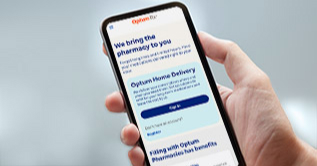
We make it easy to get medications you need, when and where you need them
How can we help?

Helpful links

  • Optum Rx

    For people with pharmacy insurance benefits through Optum Rx

  • Track orders

    Track your home delivery and specialty order

  • Pharmacy support

    Find contact information and answers to frequently asked questions

Mobile app

Optum Rx on the go

Request refills, track order status, manage billing information and much more.

Download on the App StoreGet it on Google Play

Five common fears about getting a colonoscopy

Should you worry?

Each year, 50,000 Americans die from colon cancer. (This is cancer that starts in the large intestine or rectum.) But many of those lives could be saved, if it was caught early. 

That’s why you should get regular exams starting at age 45, according to the American Society of Colon and Rectal Surgery. 

For people under 45, the rules are different.  You should get screened if you or your parents, brothers or sisters have had:

    • Polyps
    • Colon cancer, or 
    • Certain other kinds of cancers

“Let’s put things in perspective. We do almost 20 million colonoscopies every year in the U.S.,” said Joshua Jacobs, MD, Optum. "Problems happen less than 1% of the time."

“On the other hand, colorectal cancer is the second largest cause of cancer deaths. For most people, screening is the safer choice by a long shot.”

In general, there are two ways to screen for colon cancer: 

    • Have a colonoscopy, or  
    • Complete an in-home testing kit

To learn more, call your doctor’s office.

Five common fears you can put behind you

1. “It sounds scary.”

A colonoscopy is very safe. Problems happen less than 1% of the time. It's rare, but you can bleed or have a tear in the intestine. Or you could have side effects from the medicine. Once in a while, the doctor won’t be able to see everything clearly.

2. “I’m afraid it will hurt.”

It isn’t painful. The doctor will put some gas in your colon to make the insides easier to see. You might feel a little bloating or discomfort. 

Almost everyone gets medicine to feel more comfortable. You may not remember the exam at all. For most people, the whole screening takes less than an hour.

3. “My friends say the prep is the worst part.”

You need to use a  colon “prep” to clean out your colon the day before the exam. It could be pills or a liquid. Your doctor will give you a prescription for it. 

Your doctor may give you a list of foods to stay away from for a few days. (For example, vegetables with a lot of fiber.) 

No one enjoys spending extra time in the bathroom. But the prep is very important. The doctor needs to get a clear look at the inside of your intestines. You don't want the doctor to miss a growth or have to repeat the exam.

4. “I’m worried about what they’ll find.”

During the exam, your doctor may find a polyp. A polyp is a small growth on the lining of your colon that may become cancerous. 

Most polyps can be removed during the colonoscopy. What if you need surgery to remove cancer? The good news is many surgeries can be done in a minimally invasive way. 

5. “If they find something, there’s nothing they can do.”

Colon and rectal cancer can be cured when found early. But only 4 out of 10 colorectal cancers are found early because people don’t get their exams. 

A colonoscopy can save your life

Find out when you need one. And don’t delay in scheduling your exam. Talk to your doctor if you have any questions. The more you know about the exam, the more comfortable you’ll feel. 

Will Medicare cover a colon cancer screening?

Original Medicare covers these tests at 100% of the Medicare-approved amount when you get them from a provider who accepts Medicare

  • Fecal occult blood test
  • Flexible sigmoidoscopy
  • Colonoscopy

You pay nothing (no deductible or coinsurance).

Medicare Advantage plans must also cover them without applying deductibles, copays, or coinsurance when you: 

  • See a network provider, and 
  • Meet Medicare’s rules for the service

Get screened

Schedule your colon cancer screening.

Sources

    • Medicare Interactive 
    • American Society of Colon and Rectal Surgery
    • U.S. Preventive Services Task Force 

The information provided is for general informational purposes only and is not intended to be medical advice or a substitute for professional health care. You should consult an appropriate health care professional for your specific needs.