
Informational

Data use:

We use cookies and similar tools to make your use of this website easy and to keep it working properly. We may share data about you and how you use the site with third parties, such as analytics and marketing partners. Learn more in our Privacy Policy and Terms of Use. By continuing to use the site, you agree to this.

Health care

We provide affordable and personalized care

How can we help?

Helpful links

Financial

Accounts to help you save and pay for health care expenses

How can we help?

Helpful links

  • Resources

    Find contribution limits, savings tools, calculators and eligible expenses

  • Account support

    Find contact information and frequently asked questions

Tax season resources

Get ready for HSA tax season

If you used an HSA this year, the HSA Tax Center offers general information about contributions, eligible expenses and commonly used tax forms — all in one place.

Pharmacy

We make it easy to get medications you need, when and where you need them

How can we help?

Helpful links

  • Optum Rx

    For people with pharmacy insurance benefits through Optum Rx

  • Track orders

    Track your home delivery and specialty order

  • Pharmacy support

    Find contact information and answers to frequently asked questions

Mobile app

Optum Rx on the go

Request refills, track order status, manage billing information and much more.

Download on the App StoreGet it on Google Play

In this article

The hidden message that shaped Dr. Thad Schilling's approach to primary care

October 28, 2026 | 5-minute read

[MUSIC PLAYING IN THE BACKGROUND THROUGHOUT THE VIDEO]

[Dr. Thad Schilling working at a computer]

[Dr. Thad Schilling speaking on screen]

THAD SCHILLING: Early in my practice, my five-year-old daughter handed me a little note.  

[A child’s note in crayon]

“Daddy, I wish you didn't have to do charts.” That was just crushing. 

[Dr. Thad Schilling with a patient in an exam room]

[On-screen text: Dr. Thad Schilling, CEO, Optum Massachusetts] 

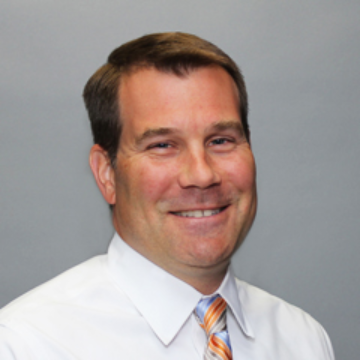
My name is Thad Schilling, and I lead the Massachusetts clinics that are part of Optum Health. 

[Dr. Thad Schilling holding up child’s note, “Daddy, I wish you didn’t have to do charts,” with a close up of the border showing the word, “evolve”]

My daughter, she made a little border. Where it says “love”, love actually turned into the word as clear as day, “evolve”. 

[Dr. Thad Schilling walking into an exam room greeting a patient] 

Eric. 

ERIC: Hello.

Hey, how you doing? So now part of my job is helping evolve the healthcare system to help sustain primary care doctors in their work. Creating robust teams is one solution. 

[Dr. Thad Schilling in the clinic talking and working with colleagues, tending to patients] 

And so this means doctors, nurse practitioners, physician assistants, nurses, medical assistants, clinical pharmacists, integrated behavioral health clinicians can provide even better care than one individual physician, and the patient experience is even better. There's this effort that all of us are making so that the conditions are better and easier for primary care doctors. So I'm really optimistic about the future for our next generation of caretakers. 

[On-screen text: That’s Healthy Optumism.]

[On-screen text: Optum, Patient Care, Pharmacy Services, Health Intelligence & AI]

Early in his career as a primary care physician, Dr. Thad Schilling was working at home when his 5-year-old daughter walked in and handed him a note that read, “Daddy, I wish you didn’t have to do charts.”

The message hit Schilling hard. He was balancing patient care with raising a young family, often spending his evenings and weekends catching up on patient charts. 

Around the edges of his daughter’s note, she had repeatedly written the word “love” in crayon. A few of the letters were transposed, as children’s letters sometimes are, and something caught Schilling’s eye.

At the bottom, instead of seeing love, Schilling saw a different word: evolve. 

“That, to me, was a message about the need for evolving,” he said. 

The note became more than a family keepsake. It helped crystallize a challenge Schilling had already begun to see in medicine: caring for patients could be deeply rewarding, while the way the work was structured often made it difficult for a primary care doctor to sustain that work over time.

Today, as CEO of Optum Massachusetts, he continues to be guided by that experience in his efforts to better support clinicians in primary care. 
Finding his place in medicine

Growing up in a small town in Ohio, Schilling developed an early fascination with science and biology. He initially planned to pursue a career in scientific research and even completed a college senior thesis on cancer and cell cycle regulation.

Spending a summer working in a laboratory helped him realize that while he loved science, he wanted a more direct connection with people. Medicine offered both.

He eventually settled on primary care, drawn to the opportunity to build long-term relationships with patients through different stages of life. 

While training in Boston, he became interested in population health and value-based care, where improving health outcomes takes priority over the number of patients a practice sees. 

But practicing medicine also exposed him to its challenges.

“I want to practice for 30 or 40 years,” he remembered thinking. “It can’t be this bad. We have to make this better.” 

Then his daughter wrote that note.

A call to evolve

For Schilling, the note made a familiar professional challenge deeply personal.

“Primary care is an all-encompassing job,” he acknowledged. 

Administrative demands can extend a clinician’s work well beyond time spent with patients. In Schilling’s case, his daughter could see how much time he spent completing charts at home.

Her message helped strengthen his commitment to improving the experience for other clinicians, too. 

“We have to do things differently,” Schilling said. “So, I committed myself to helping be part of the solution.” 

Schilling's own struggle to balance work and life sparked his interest in redesigning how doctors and care teams meet patients' routine health needs. As his leadership responsibilities grew, so did his opportunity to help improve support for both clinicians and patients.

“Part of my job is helping evolve the healthcare system to help sustain primary care doctors in their work,” he explained.

Dr. Thad Schiling


Building solutions today for a better tomorrow

Schilling points to strong, interdisciplinary teams as one way to better support clinicians and their patients in primary care settings. Those teams can bring together doctors, nurse practitioners, physician assistants, nurses, medical assistants, clinical pharmacists and integrated behavioral health clinicians. 

“Creating robust teams is one solution,” he said. Together, those professionals “can provide even better care than one individual physician.” 

It is an approach connected to Schilling’s earlier leadership work. At Reliant Medical Group, now part of Optum, he helped pioneer a move toward patient-centered, team-based care, bringing together clinicians across disciplines to improve quality and efficiency.

Schilling is also encouraged by innovations like AI tools that can improve workflows and reduce administrative burdens. By helping streamline routine tasks, these technologies can give clinicians more time to focus on delivering high-quality, personalized care while preserving time outside of work.

One example is a chart summarization tool that brings together clinical information from multiple sources and highlights key details in the medical record. By reducing the time clinicians spend reviewing charts, it can help them better prepare for visits and spend more time focused on the patient in front of them.

For Schilling, the goal reaches beyond improving the experience of clinicians practicing today.

“There’s this effort that all of us in healthcare and leadership are making,” he said, “to try to make the conditions better and easier for our next generation of caretakers.” 


About Optum
Optum is a leading information and technology-enabled health services business dedicated to helping make the health system work better for everyone. With more than 310,000 people worldwide, Optum delivers intelligent, integrated solutions that help to modernize the health system and improve overall population health. Optum is part of UnitedHealth Group (NYSE: UNH). For more information, visit www.optum.com.

Optum Media Contact:
newsroom@optum.com

Related news

Dr. Anne Dixon on Leadership, Hockey and Clinician Care

News story

Dr. Anne Dixon on leadership hockey and clinician care

Learn how hockey, family and medicine shaped her leadership approach and passion for improving clinician experience.

September 10, 2026

Home Infusion Care Continued During Hurricane Helene | Optum

News story

Home infusion nurse helps patient continue care despite hurricane

When Hurricane Helene disrupted access to care in North Carolina, an Optum infusion nurse helped a patient receive the treatment she depended on.

September 8, 2026