





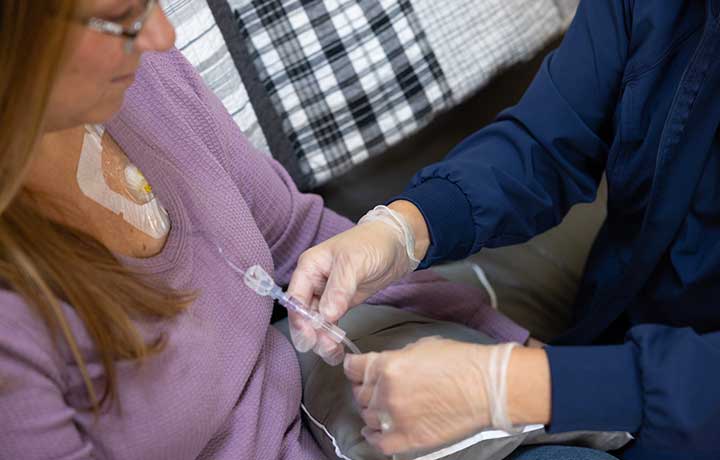
Skilled infusion care for chronic inflammatory conditions
Optum Infusion Pharmacy is here for you. Our care team helps meet your treatment needs for chronic inflammatory conditions.
Conditions we treat with infusion therapies
We provide immunoglobulin and other infusion therapies for people being treated for:
- Ankylosing spondylitis
- Chronic inflammatory demyelinating polyneuropathy (CIDP)
- Crohn’s disease
- Myasthenia gravis (MG)
- Paroxysmal nocturnal hemoglobinuria
- Plaque psoriasis
- Psoriatic arthritis
- Rheumatoid arthritis
- Ulcerative colitis
- And more


Find convenient infusion locations with your comfort in mind
Comfortable infusion suites
From the moment you arrive, you’ll get personalized care at every step. There’s free parking, comfortable recliner chairs and private or shared rooms.
Biologic infusions at home
With infusion pharmacies and nurses across the country, we can administer high-quality, cost-effective infusion therapies for short- and long-term conditions.
- 99.9% distribution and dispensing accuracy2
- 19,000 nursing visits each month3
- 96% patient satisfaction with Optum Infusion Pharmacy nurses
Infusion care you can count on
Melissa’s health journey with Crohn’s disease is easier to navigate because of her friendship with Jami, her Optum Infusion Pharmacy nurse.

Frequently asked questions about biologic medications
Biologic medications come with some warnings and side effects. We screen patients for those risks and issues that might occur during or after infusion.
The length of time for an infusion can vary. In most cases, infusions of biologics will take 30–60 minutes at a time.
Infusing at home can cost less. It depends on your insurance coverage. Some insurance plans encourage patients to infuse high-cost therapies at home.
Yes, you need a nurse with you to infuse at home. Biologic medications carry some serious warnings. Our infusion nurses will monitor your vital signs and might adjust your infusion rate.
They’re also prepared to treat anaphylaxis (shock) in case you have a serious reaction to the medication.
Our infusion nurses follow a common and strict protocol to help prevent reactions. They’ll stay with you throughout infusion to monitor for reactions. They might give you other medications if needed.
Side effects are different for each medication. Everyone reacts to medications differently. Your doctor, pharmacist and infusion nurse can help you understand the side effects you might have.
Yes, you can receive infusion treatments around your loved ones. Our nurse is not there to interfere with your daily life. We’re there to administer your treatment and help make you as comfortable as possible.
Typically you can work after you receive infusions. If you experience any discomfort or bothersome symptoms after your infusion, talk with your pharmacist and nurse.
Related infusion resources

Article
Learn how to keep a positive mindset when living with a chronic condition.

Article
Taking care of yourself is an important part of being a good caregiver. Here's what to keep in mind.

Article
Running or walking is a great way to do some good for your body — and for others.
- Optum Infusion Pharmacy. Internal analysis of data. 2023.
- Optum Infusion Pharmacy. Internal analysis of data. 2024.
- Optum Infusion Pharmacy. Internal analysis of data. 2025.
- Optum Infusion Pharmacy. Internal analysis of data. 2024.